petit amant
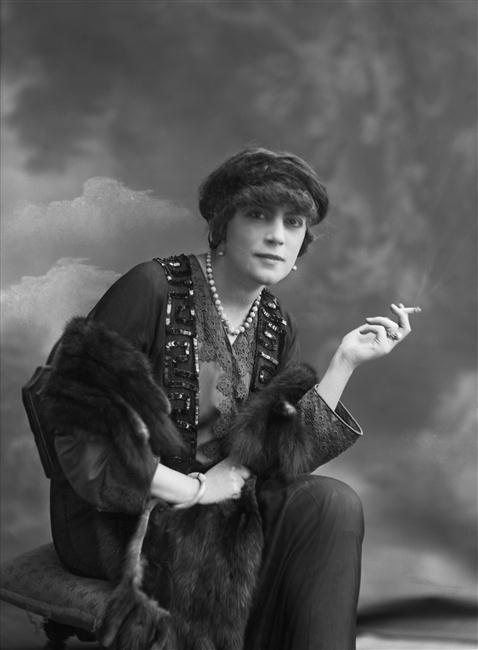
Lucie Delarue-Mardrus (1874-1945)
She called herself (to Natalie): ton petit amant
Tu n'étais pas pour moi… Jamais
Je ne romprai le sceau de songe et de silence
Qui fermera ma bouche à l'amour, désormais,
Car je ne retrouverai l'horreur et l'opulence
De l'autrefois sans espérance.
One of the most prolific poet-novelists in the sapphic circle of Natalie Barney's Salon, Lucie Delarue-Mardrus refused the Académie Française poetry prize in 1939 and the Légion d'Honneur thrice.
Her very first verses were written for a baroness and a family friend she only names 'Imperia,' for whom her feelings were unrequited. Years prior to her publication and early recognition, a well-connected suitor would find her poetry charming, and leveraged his connections to find her a place in Sully Prudhomme's salon.
C'est cette petite fille-là qui fait ces vers d'homme? ... Regardez ce visage ! Regardez ces yeux ! Et vous avez entendu cette voix, cette musique ? ... Eh bien ! Je vais vous lire un des poèmes de cette enfant ! Il m’appela par la suite « un phénomène ».
She quickly became a hidden gem amongst the literary salonistes of the era. Upon a chance encounter at a literary dinner at which he saw her recite her poems (most likely the very same verses written about Imperia), she captured the immediate attention of Dr. J.C. Mardrus, famous at the time for producing the French-language translation of One thousand and One nights.
As though he were the Sultan who adopted the learned slave girl Tawaddud after a mere glimpse of her brilliance in volume 5 of his Mille et une nuits (which he later dedicated to Lucie), he immediately asked for her hand in marriage at her family's estate, calling her "one of the great [sic] poètes of our time."
Feeling as though she were entering "un beau conte bleu," she accepted, in spite of by all accounts being only, or primarily, attracted to women.
Dr. Mardrus would go on to finance and arrange Lucie's first collections of poetry about Imperia, which garnered immediate attention. Renée Vivien, who had been immersed in her study and revival of Greco-Sapphic verse at the time, wrote her a letter of admiration after reading Ferveur and resonating with the sapphic undertones, the imagery of oceanic lesbian love encoded in Lucie's verse. Enamoured by Sappho to the point of occultism, Renée Vivien dreamed of rebuilding a woman's paradise and a poetess' Academy in Lesbos.
Lucie wrote her back, thanking her, having read the copy of Renée's Cendres et Poussières she had enclosed in the letter and remarking, privately, that it reminded her of the very same feelings she held for Imperia.
Après avoir lu ce livre saphique où je trouvais de secrètes correspondances avec les vers que, jeune fille, m’avait inspirés Impéria, j'écrivis à Renée Vivien pour la remercier de son envoi.
They quickly grew friendly, and Renée would eventually introduce her to the sapphist Eva Palmer (Natalie's first lover, who left the circle in 1907 in order to marry the male greek poet Angelos Sikelianos), who in turn introduced her to Natalie, with whom Lucie began a love affair by late 1902.
It's notable that throughout all of this, Dr. Mardrus was fully aware of his wife's sexual orientation and womanly pursuits. Scholarly and contemporary perspectives on Dr. Mardrus's relationship to his lesbian wife seem to differ:
Tara Engelking argues that the sapphists she had befriended bemoaned and protested Lucie's marriage to Mardrus through their poetry, although the claim is contestable:
"Both Barney and Renée Vivien wrote poems protesting Lucie's marriage. Barney's "À une fiancée" appeared in her Quelques Portraits-Sonnets de Femmes (1900)... Vivien published "Je pleure sur toi..." In this poem addressed to the young bride, Vivien echoes Lucie's fear of losing her independence along with her virginity.
Natalie and Renée had not yet met the Mardruses until the year 1902, making it impossible for Natalie's love poem to have been written for Lucie, with whom she began an affair soon after they met. While Renée's poem identifies the woman as a 'daughter of the sea,' echoing Lucie's Normandic origin, and portrays the institution heterosexual marriage as a gynécées (which could pass for a visual linkage to the orientalist Dr. Mardrus), the more forward identification of both elements seems to be that of Eva Palmer, a devoted Sapphist and Greek scholar whose ongoing engagement to the male Sikelianos had abruptly disrupted the social network of the circle in 1906-1907, when the poem was published.
The other irreconcilable and strange aspect of the Mardruses' marriage is that, despite contemporary observers identifying Dr. Mardrus as quite possessive and controlling (as well as evidently having been a womanizer in his own right), the marriage remained, by Lucie's own account, unconsummated.
Natalie would argue, years after the Mardruses' death, that Mardrus had been an artistically demanding husband, from which Lucie eventually set herself free (like Colette, who freed herself from her husband Willy who locked her in a room to act as his ghostwriter). In Souvenirs Indiscrets Natalie describes the separation as having amicably taken place due to Lucie's reluctance to allow Dr. Mardrus' lover, Cobrette, into the household. Later in life, the senile Dr. Mardrus is said to have had no memory of his first wife, arguing that he had only ever been married to Cobrette.
When I spoke to Princess Almond of the mysterious compatriot who had replaced her beside Mardrus, she did not seem to know of her existence. Perhaps it was only one of his big pranks? ... For several months, the mistress of her husband who, he, aspired, according to Oriental custom, to include her in his harem. Princess Almond, outraged, refused this solution. He argued that this was only a new slave who already admired her and would be entirely devoted to her. In agreement with Princess Almond, he asked for divorce, in order to be able to marry his "Cobrette."
Lucie's own account from her Mes Mémoires (which Natalie cites elsewhere in Souvenirs, but interestingly omits in narrating the divorce) illustrates the separation quite differently.
La liaison qu'avait J.-C. Mardrus, depuis 1913, avec celle qui est maintenant sa seconde femme, ne me rendait pas jalouse. Notre mariage, je l'ai dit, n'était pas situé sur le plan qui engendre querelles et revendications.
Cependant il était temps pour nous deux de vivre chacun chez soi. À l'une des permissions de mon mari nous en avions parlé comme deux amis parfaitement d'accord.
Lucie and J.C. separated in late 1915, and it was their mutual family friend, Georges Trouillot, who convinced her to ask for a divorce, given the untenability of their social statuses.
By Lucie's own account, the Mardruses' strange affection for one another had been strictly intellectual and aesthetic, yet intensely so in a manner that transcended a typical scholarly marriage of convenience:
Par ailleurs son coup de foudre avait été tout intellectuel. Il n’approchait sa novice épouse qu’avec le sentiment d’étreindre une créature sacrée. Un tel amour, nulle autre femme ne l’avait connu de sa part, nulle autre ne devait, par la suite, le connaître.
Anna Livia, in her introduction to her English-language translation of The Angel and the Perverts, portrays Dr. Mardrus' sexual disinterest in Lucie and her lesbian exploitations as a form of dismissive infantilization:
She had not yet recovered from her three year passion for Imperia and trustingly told her husband the story of her infatuation, showing him a photograph she had of the woman. Joseph-Charles looked calmly at the picture, declared "she was beautiful," putting the affair firmly in the past tense, and tore the photo to pieces. For him it was nothing but a boarding school romance, of no interest and no importance.
She then goes on to argue that:
In this his opinion was entirely conventional, for lesbian passions are frequently dismissed as merely a phase, even when, as in Lucie's case, they last a lifetime and survive the stormiest of romantic marriages.
Livia's account does ring true to some extent: this dismissive position from which the men in these lesbians' lives regarded their sexuality and affairs was well-beyond-conventional, and was often the basis of the men's possessive and entitled assumption that their lesbianism could so be dispelled for a heterosexual attraction to himself if he so willed it. In My Blue Notebooks, Liane recalls that the archaeologist Salomon Reinach, a friend of the circle, once said:
Salomon has declared that he would have loved Pauline more, and after her Flossie, and from a great distance me, if we had led lives of perfect purity! I gave him a violent and eloquent lecture to prove that dung is necessary to the blooming of lilies...
Liane would later argue that perhaps Lucie's husband had regarded her the same way (Liane's own husband was much of the same), saying that:
Luckily she was able to escape from her husband, and since that experience she has never thought of marrying again, nor of winning the heart of any other man...
Yet, Livia's and Liane's assumption J.C. considered Lucie's romantic attachments to the women in her lives - from which her poetic cadence was inextricable from the very beginning - a novelty presupposes that he considered the subject matter of her poetry (her relationship with 'Imperia') petty and unfounded, when he had been the one to desperately push her to publish the two collections on which it had been based.
She omits a key passage from the memoir that may argue the contrary: Lucie, who approached J.C. with the photo of Imperia in a moment of weakness and anguish, describes his action as having been motivated by the belief that "the gesture would make her think of Imperia no more." If Mardrus had infantilized his wife's lesbianism, the notion may not have arisen from a place of possessiveness or jealousy, sexual or otherwise, nor any controlling belief that his heterosexual relationship with Lucie was any more significant than her relationship with her lesbian lovers. Rather, it may rather have been a simple if misguided desire to clear her heart of her current anguish.
The masculine literary salons the Mardruses frequented were occupied by the gay pederasts of their era: André Gide was a 'close friend' of J.C.'s. The infantile iconography of the patron-poet, and neoclassical pederasty and Henrician mignon pervaded - especially in the years following Oscar Wilde's arrest - the artistic imaginations of these salonistes.
Unlike the Colette-Willy relationship, marked by constant sexual-industrial exploitation, J.C. and Lucie's unconsummated, intellectual-aesthetic relationship was, arguably, no more governed on the husband's part by the archetypal marital expectations of heteropatriarchy than it seemed to have been modeled after these homoerotic and homosocial archetypes.
In Adventures of the Mind, Natalie even recalls:
And if the doctor once proposed, in front of his wife, that I should take on the burden of bearing a child for them, it was only to distribute the labor more equitably among us. That I should carry his child instead of his wife, whose literary work did not leave her the necessary time, seemed to him the most natural thing in the world. But my nature was once again opposed to it, and, despite my idleness and the honor that he was doing me, I had to refuse.
Dr. Mardrus never perceived himself as the eventual true husband to a lesbian whose woman-oriented fancies she would eventually outgrow. When he took it upon himself to dress and take care of Lucie, whom he marveled that she could 'even cross a street at all,' Mardrus may have seen himself as a pederastic mentor-patron to the degendered young artist-mignon. Lucie testifies as much herself - the conception is dressaged in the Orientalist imagery of the Sultan and his clever protege, which may have been J.C.'s very interpolation of the same pederastic form.
Insodoing, as often as he feminized Lucie, dressing her in a flowery dress for their wedding, referring to her by the pet name "Princess Almond," so too had he masculinized her, dressing her up in a tomboyish cycling outfit for the wedding photo and calling her his "little Duke of Normandy," and it's perhaps for this degendering, purely aesthetic-intellectual attraction towards Lucie that he attentively supported her lesbianism.
The story of J.C. Mardrus' strange entanglement with his "Duke of Normandy" resonates with the contemporary Ganymedian phenomenon of homosocial pederastic appreciation between Parisian masculine aesthetes of his era, as much as Lucie's entanglement with Natalie was threaded the Sapphic reality of Paris and the rue Jacob.
Mardrus had not only supported but actively enabled (accompanying Lucie on visits to the rue Jacob) her affair with Natalie for the entirety of its duration. However, as Lucie confronted the slow and maddening realization that Natalie had seduced her for the benefit of Renée, whose affections she had been attempting to win back following their breakup, Mardrus insisted that Lucie's obsession had grown "unhealthy" ("morbides"), a notion with which Lucie reluctantly agreed.
Je te tiens au poignet, mal vêtue et perverse,
Blonde, blonde!… et britannique terriblement…
N’imagines-tu pas, dans ce vent plein d’averse,
Qu’il pourrait arriver un sombre événement?N’attends-tu pas de moi quelque mauvaise absence
Où le geste brutal qui tourmente mon poing
Me jettera sur toi, pâle de jouissance,
Pour t’assommer à coup de caillou dans un coin?
from Elle à Elle, a manuscript of poetry explicitly detailing Lucie's relationship with Natalie.
The patronizing/infantilizing position of care towards his "Little Duke" that Mardrus occupied may have motivated him to take Lucie and travel to North Africa, putting some (as Lucie admits) much-needed distance between herself and Natalie.
Still, Natalie and Lucie would remain friends, and became noticeably more amicable to the point of becoming lifelong friends upon her return from several-years distance.
Ce sentiment oscilla longtemps entre l'amour et l'amitié, puis se résolut en une amitié à toute épreuve.
Natalie, in Souvenirs Indiscrets
Lucie would become the first recipient of the Prix Renée-Vivien, an award named after the late Renée who passed away several years after Lucie's return to Paris. The award was founded by Hélène Zuylen, Renée's lover from whom Natalie had attempted to steal her back (through visibly parading around her affair with Lucie, for whom, as aforementioned, Renée held a great deal of admiration). She graciously accepted the award, despite having renounced the award from the Académie Française, and upon her receipt of the prize, Natalie slipped her an old envelope containing an old, unopened correspondence from Renée that she had intended to send prior to her death.
Lucie would also later become the first president of the Académie des Femmes, founded by Natalie as a posthumous fulfilment of her promise with Renée to start a school of Sapphic writers in Lesbos. She would later write The Angels and the Perverts, featuring a bigendered/intersex protagonist named Mario/Marion, who navigates both the gay and lesbian salons of Paris as she recalled it herself. The lesbian dimension of the roman à clef contains a much more moderated fictionalization of her romance with Natalie, Renée, and Hélène - although more comically fictionalized, as Natalie once again fails devastatingly to recapture Renée - than the autobiographical account featured in Elle à Elle, which remained unpublished as long as she drew breath.
And, yet eager to read The Angels and the Perverts as he had listened to her poems about Imperia, J.C. remained on more-than-friendly terms with Lucie for decades following their divorce. J.C.'s passion for Lucie's writing never once faltered, neither did his admiration for her as his angelic, degendered poet-figure. In her memoir, written more than two decades following their separation, she wrote:
Et, témoin des arts variés que je m’amuse à cultiver, avec toute la grâce de son langage unique il a trouvé pour moi cette formule : « l’archange en son laboratoire »
In the case of the (un)reliable narrators of the Mardruses' divorce, one wonders: it is completely legible to believe Natalie's portrayal of the account as having been more raw and uninhibited in that it is entirely posthumous.
In the years following both the Mardruses' deaths, Natalie anecdotally recalled that she visited the doctor in the years leading up to his death. Having gone senile in old age, he couldn't seem to recall who Lucie was from a portrait:
"Mais, explique-moi bien. De qui parles-tu?"
"De la princesse Amande, ta première femme, pour laquelle tu as tant fait et tant dit."
"Ma première femme ? Mais je n'ai jamais eu comme épouse que ma Cobrette!"
Yet, one has to wonder: if the senile J.C. Mardrus couldn't recall any other wife than Cobrette as he reached the end of his life, perhaps it's because it had been the emotional truth. The lesbian Lucie Delarue-Mardrus, who often depicted herself as an incomplete man in verse, had never consummated her marriage with the Sultan J.C. Mardrus. The "Princess Almond" Lucie was no more a wife than she was Mardrus' Ganymede, his poetic "archangel", the "Duke of Normandy."
Yet, in the preface to the new critical edition of the volume of poetry, the editor Mirande Lucien identifies Natalie as having made several posthumous edits to Elle à Elle, which she retitled Nos Secrètes Amours before it ever saw the light of day.
Natalie claimed that Lucie handed her the manuscript in 1903, before she left to Africa, in an attempt to cleanly break off the affair. Yet, the original manuscript, which remained in Natalie's possession until the end of her life, contained one final poem written 2 years after the one preceeding it: the last poem of the manuscript was dated 1905, marked as having been written during her stay in North Africa, and concludes the manuscript with the damning statement "This endless thread that binds me... I do not want you to see it, either."
Toi, chère blonde inexpliquée, inexplicable,
Par laquelle je fus un enfant malheureux,
Tu jetas à jamais entre nous deux le câble
D’un seul de tes légers, cassants, si blonds cheveux.Ce fil infini qui m’attache,
Quand les femmes m’ouvrent leurs bras,
Elles ne le voient pas et ne le savent pas…
–Mais toi, je ne veux pas non plus que tu le saches.
Natalie had lied: Lucie was still not yet ready for Natalie to lay eyes on her poetry in the year 1905. Perhaps Natalie herself similarly played a farce of selective memory when she took a pen to her "petit amant"'s work.
Yet, it's unclear if Natalie's final act of selective senility was loving or destructive. Natalie submitted the first proof of the manuscript with the final poem removed (alongside many more destructive edits, evidently) to the publisher anonymously.
Crossed out was the pen name she appended to the manuscript, only for her to quickly reconsider: perhaps she recalled too late that she had slighted both Lucie and Renée.
" Sapho revit " (Sappho Reborn)
Written about Lucie:
Liane, in a diary entry, expressed her admiration of Lucie, calling her "adorable," recalling a moment she seemed to have hit on her.
Lily often featured the Mardruses, especially Lucie, in her Memoirs
Natalie wrote portraits of Lucie in both her Adventures of the Mind and her Souvenirs Indiscrets
Written by Lucie:
Nos Secrètes Amours, about Natalie
The Angels and the Perverts, featuring Natalie, Renée, and Hélène
Excerpts:
1. Épousailles
11. Sanglot
14. Malgré
17. Retour
21. Furieusement
25. Brutalité
33. Ton Rire
36. Blessure
46. Fin
- Mes Mémoires
- Tara Engelking, "L'Ange et les Pervers: Lucie Delarue-Mardrus's Ambivalent Poetic Identity" (1992), "The Literary Friendships of Natalie Clifford Barney: The Case of Lucie Delarue-Mardrus" (1999)
- Mirande Lucien, foreword to the Nos Secrètes Amours critical edition (2008)
- Anna Livia, foreword to The Angels and the Perverts, English translation (1995)